
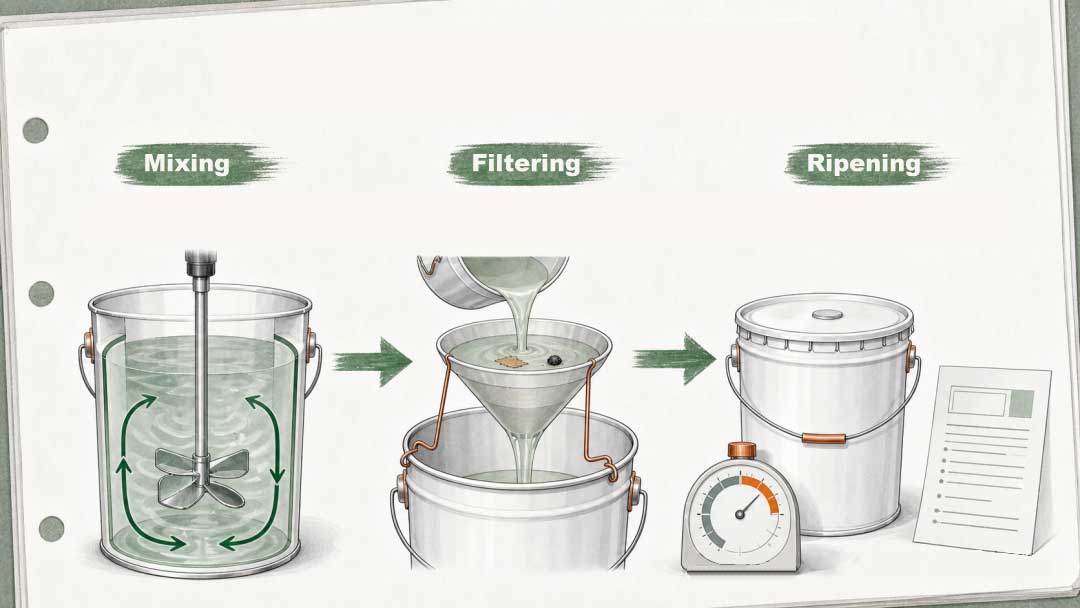
After opening the paint container: stirring, filtering, and induction - three steps addressing three distinct…
Direct Powder Coating or Electrophoretic First?
Differences Between Electrophoretic Coating Followed by Powder Coating and Direct Powder Coating, as Well as the Underlying Mechanisms and Applications
In the field of metal surface treatment, powder coating is a common and environmentally friendly process. However, when faced with the two methods of “electrophoretic coating followed by powder spraying” and “direct powder spraying,” many companies are confused. What exactly are the differences between them? Which one performs better? What are the underlying principles? The following will explain these one by one.
Comparison of the two processes
| Effect | Electrophoresis Powder Coating (Composite Process) | Direct Powder Coating |
| Corrosion resistance | Extremely strong (salt spray test can reach over 1000 hours) | Intermediate (usually 300–600 hours) |
| Adhesion | Very strong (chemical bonding at the base layer, mechanical interlocking at the surface layer) | Good, but depends on the quality of preprocessing |
| Complex structure coverage | Excellent (electrophoresis can penetrate into corners and gaps) | Generally (dead angles are difficult to cover due to electrostatic shielding) |
| Coating uniformity | High (stable electrophoresis film thickness, powder spraying reinforcement) | Significantly affected by equipment and operations |
| Appearance and Color | Determined by powder spraying, good for decoration | Rich colors, adjustable gloss |
| Cost and efficiency | High initial investment, suitable for large quantities of high-demand products | Low investment, suitable for multiple varieties in small batches |
| Environmental friendliness | Electrophoresis is a water-based system, powder spraying is solvent-free, overall environmentally friendly | Powder coating itself is environmentally friendly, but the pre-treatment may generate wastewater. |
Why electrophoretic coating + powder-spraying have stronger performance?
1. Electrophoretic paint: Putting an “invisible protective suit” on metal
Electrophoretic coating uses the electric field effect to make charged water-based paint particles automatically “swim” to the metal surface and deposit into a dense, continuous film. This process has several key advantages:
① Molecular-level coverage: Even the smallest gaps or internal corners can be penetrated by electrophoretic paint;
② Chemical bonding: The paint film is tightly bonded to the metal through hydrogen bonds or coordination bonds, providing extremely strong adhesion;
③ High density: After curing, the water content is extremely low, effectively blocking water, oxygen, and corrosive ions (such as Cl⁻);
④ Cathodic protection: Especially for epoxy electrophoretic paint, it can slow down the metal corrosion process. Although this electrophoretic film is thin (usually 15–25 microns), it is the “anticorrosion cornerstone” of the entire coating system.
2. Powder Coating: Provides ‘Appearance’ and ‘Protection’
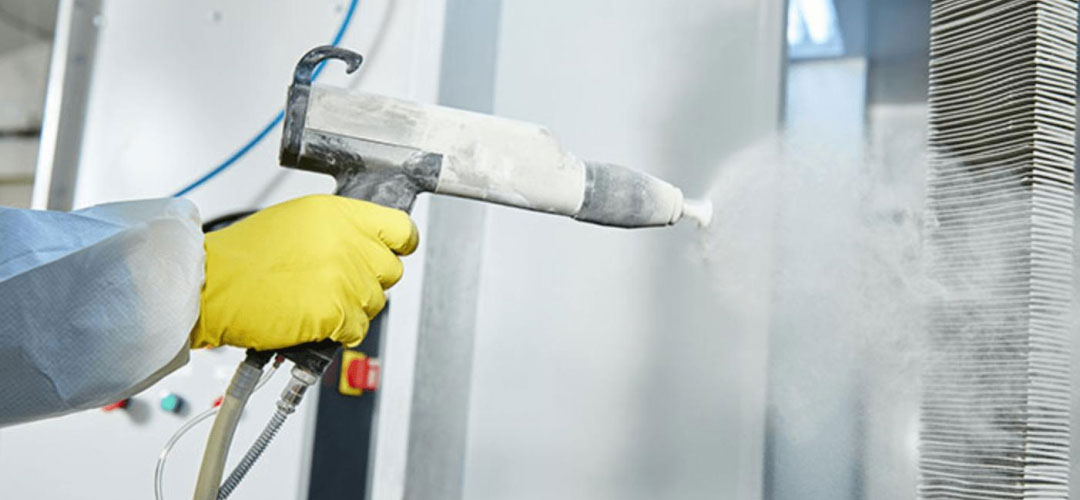
Powder coating is applied to the surface of a workpiece through electrostatic adsorption and then cured by high-temperature melting, forming a hard and smooth outer layer. Its advantages are:
① strong decorative effect (available in various colors, textures, and gloss levels);
② wear-resistant, weather-resistant, and UV-resistant;
③ solvent-free, with almost zero VOC emissions.
However, its disadvantages are also evident: the electrostatic process has difficulty reaching the interior of complex structures, resulting in thin coatings or missed areas at edges and grooves; at the same time, if the metal surface is not properly treated (e.g., oil or oxide layer present), adhesion will be significantly reduced.
3. The “1+1>2” Effect of Composite Processes
When electrophoresis is combined with powder coating, the two complement each other’s advantages:
① Electrophoresis as the primer: provides ultimate corrosion resistance and an extremely strong adhesion base;
② Powder coating as the top coat: gives an attractive appearance and additional physical protection;
③ Interface synergy: the surface of the electrophoretic layer is rich in polar groups (such as –OH, –COOH), providing ideal “anchoring points” for the powder coating, ensuring that the two layers bond tightly and are not easily peeled off.
This structure of “corrosion protection in the base layer, functional top layer” is precisely why this process is commonly used in high-end metal products (such as automotive parts and outdoor power equipment).
How to Choose Between Electrophoretic Coating and Powder Coating Processes
Situations for choosing electrophoretic coating and powder coating:
① Products are exposed to harsh environments such as humidity, salt spray, or industrial atmospheres for long periods;
② A service life of more than 10 years, or even 20 years, is required;
③ The structure is complex (such as with holes, bends, or internal cavities);
④ Customers have very high requirements for quality and reliability (such as in the automotive or rail transit industries).
Situations for choosing direct powder coating:
① The usage environment is mild (such as indoor appliances or office furniture);
② The product life cycle is relatively short (<5 years);
③ Cost-sensitive, orders are variable, and production volume is not large;
④ More emphasis is placed on appearance diversity rather than extreme durability.
Conclusion
From a performance perspective, composite coating with powder spraying after electrophoresis is significantly superior to direct powder spraying in terms of corrosion resistance, adhesion, and overall durability. Although the initial investment is higher and the process is more complex, for high-value, long-life, or high-reliability products, this “dual protection” strategy is worthwhile.
On the other hand, if the application scenario does not require high corrosion resistance, direct powder spraying becomes a more practical choice due to its flexibility and cost-effectiveness.

Find More
Comments (0)