
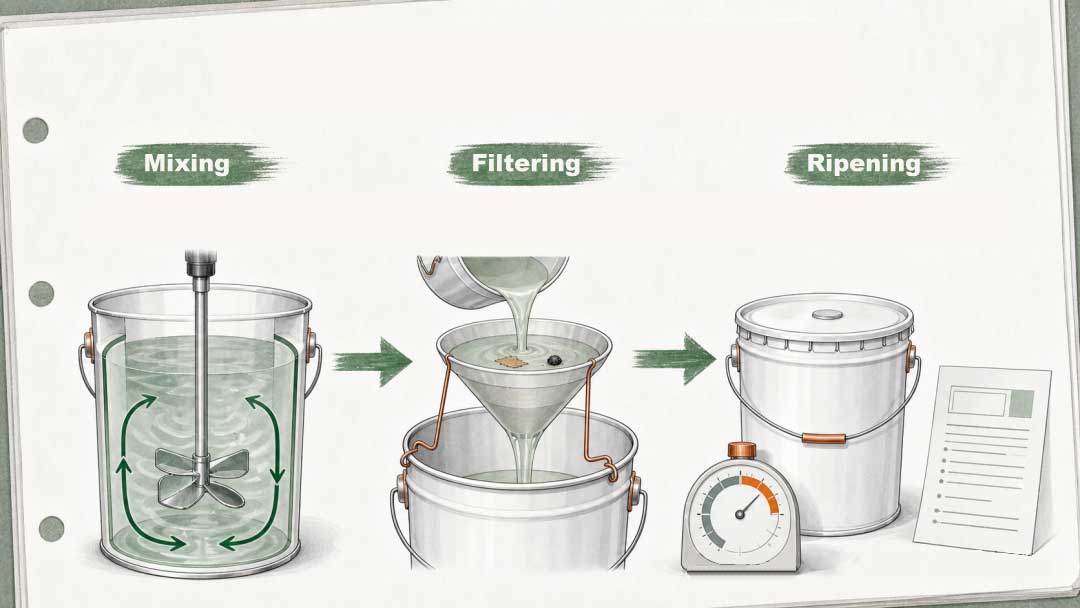
After opening the paint container: stirring, filtering, and induction - three steps addressing three distinct…
Dry Filter or Water Curtain Spray Booth?
In spray painting operations, the choice of spray booth directly impacts coating quality, environmental compliance, and production costs; consequently, many people find themselves torn between selecting a dry spray booth or a water curtain spray booth. In reality, there is no absolute “better” or “worse” option; the key lies in finding the solution that best aligns with your specific production requirements—dry systems prioritize environmental friendliness and convenience, while wet systems emphasize efficiency and stability. Below, using the most straightforward language possible, we will provide a detailed breakdown of the operating principles, pros and cons, and specific application scenarios for both types, helping you make the right choice quickly and avoid potential pitfalls.
Operating Principles of the Two Types of Spray Booths
Dry Spray Booth: Capturing Paint Mist Using “Filtration Materials”
The principle is quite simple—it is akin to fitting the entire spray booth with a “giant face mask.” The paint mist generated during spraying is guided by exhaust fans through multiple layers of dry filtration materials (such as fibrous cotton, activated carbon, paint arrestor filters, etc.). The paint mist particles are adsorbed onto these filtration materials, and the purified, clean air is then discharged into the atmosphere. Since the entire process requires no water and operates in a completely “dry” environment, it is aptly named the dry spray booth.
Wet Spray Booth: Capturing Paint Mist Using “Water”
The core mechanism here is “water curtain interception,” which is equivalent to installing a flowing wall of water (or a water cyclone device) inside the spray booth. The paint mist generated during spraying is guided by airflow toward the water curtain or cyclone device; the paint particles are adsorbed and encapsulated by the water, then flow along with the water into a collection tank. After chemical treatment to separate the paint sludge, the water is recycled for reuse, and the purified air is subsequently discharged. Common types of wet spray booths include water curtain systems and water cyclone systems.
Pros, Cons, and Application Scenarios of Dry Spray Booths
Advantages
① High Environmental Friendliness /No Secondary Pollution: The process requires absolutely no water, meaning no paint-laden wastewater is generated. This fundamentally eliminates the hassle of wastewater treatment and mitigates the risk of water resource contamination, making it easier to meet stringent environmental emission standards (it is particularly well-suited for regions facing water shortages or designated as key environmental protection zones).
② Simple Maintenance /No Need for Specialized Personnel: Routine maintenance primarily involves replacing the filtration materials. This is a simple operation that can be performed by general workers after brief training, eliminating the need to hire a dedicated professional maintenance team or to perform periodic cleaning of water tanks and replenishment of chemical agents.
③ More Stable Coating Quality: The interior of the spray booth remains dry and free of moisture, eliminating issues such as paint “fogging” or “sagging”—making it particularly suitable for applications requiring high coating precision. Furthermore, uniform ventilation pressure creates a stable environment for painting operations, thereby enhancing the smoothness and uniformity of the applied coating.
④ Controllable Long-Term Operating Costs: There are no wastewater treatment expenses, and the cost of replacing filtration materials is relatively low. Additionally, the equipment boasts high stability, avoiding common issues such as winter freezing or pipe blockages; consequently, the overall cost-effectiveness over the long term is superior.
⑤ Recyclable Paint Mist: The collected paint mist possesses a high calorific value, allowing it to be repurposed as fuel, which further reduces energy consumption costs.
Disadvantages
① Periodic Replacement of Filtration Materials Required: Filtration materials are consumables. Particularly in scenarios involving high production volumes or heavy paint usage, the frequency of replacement increases, leading to a gradual rise in cumulative consumable costs over time. Failure to replace materials promptly can compromise paint mist capture efficiency and may even result in paint mist leakage.
② High Initial Investment: The upfront procurement cost for high-quality dry filtration systems (such as those utilizing activated carbon adsorption) is higher than that of standard wet spray booths, placing a significant financial burden on small and medium-sized enterprises (SMEs).
③ Limited Adaptability to High Paint Mist Loads: These systems are best suited for operations involving low to moderate levels of paint mist. If deployed in high-load, large-batch painting environments, the filtration materials will saturate rapidly, necessitating frequent replacements and consequently increasing both maintenance intensity and costs.
④ Challenges in Exhaust Gas Treatment: The low-concentration, high-volume exhaust gas generated during painting operations is not effectively treated by standard activated carbon adsorption methods alone. Consequently, supplementary deep-treatment equipment is required; otherwise, the system may fail to meet regulatory requirements for VOC emissions.
Applicable Scenarios
Provided the following criteria are met—”low to moderate paint mist volume,” “stringent environmental protection requirements,” and “average maintenance capabilities”—a dry spray booth is the preferred choice. Specific applicable industries and scenarios are outlined below:
- Automotive Coating: The painting of vehicles—including sedans, buses, and trucks—requires a stable spraying environment to prevent paint mist from contaminating the vehicle body surface, thereby enhancing both the durability and aesthetic appeal of the coating.
- Furniture Coating: The surface spraying of wooden or metal furniture benefits from this system, as it effectively prevents paint mist from settling on the furniture surface, thereby preserving the material’s original texture and luster while elevating the overall quality and market positioning of the product.
- Mechanical Component Coating: Spray painting for mechanical parts of various shapes and sizes; capable of accommodating diverse workpiece requirements, ensuring uniform paint adhesion, and enhancing the protective properties of the components.
- High-Precision Coating: For products with stringent surface quality requirements (such as aerospace components), the system allows for strict control of temperature and humidity, ensuring the smoothness and precision of the coating.
- Other Scenarios: Areas with strict environmental regulations (e.g., major metropolitan areas and key environmental control zones); production environments involving small batches of multiple product varieties; small and medium-sized enterprises (SMEs) with limited floor space (as dry spray booths require shallow foundations and occupy a smaller footprint); and regions facing water scarcity.
Advantages, Disadvantages, and Applicable Scenarios of Wet Spray Booths
Advantages
① High Paint Mist Capture Rate: Capable of efficiently capturing paint mist generated during spraying operations. Standard wet spray booths can achieve a capture rate of up to 97%, while high-end models—such as water-whirl types—can exceed 99%. This makes them suitable for high-load, large-volume spraying operations, effectively preventing paint mist from escaping and contaminating both the environment and the products.
② Lower Initial Investment: The equipment structure is relatively simple (e.g., standard water-curtain types), resulting in lower procurement and installation costs compared to high-quality dry spray booths. This makes them suitable for SMEs with limited initial capital.
③ High Paint-Holding Capacity and Low Maintenance Frequency: Since water serves as the capture medium, its capacity for holding paint solids is far greater than that of dry filtration materials. Even with infrequent maintenance, there is minimal impact on the air supply and exhaust efficiency. Consumables do not need to be replaced daily, making the system ideal for continuous production environments.
④ Relatively Easy Waste Gas Treatment: VOCs (Volatile Organic Compounds) generated during spraying can be treated by adding chemical agents—such as flocculants—to the water. This simplifies the waste gas treatment process and accommodates a wide variety of paint types (e.g., solvent-based and water-based coatings).
⑤ Effective Cooling: The water circulation system helps lower the temperature inside the spray booth, thereby reducing safety hazards associated with solvent evaporation while simultaneously improving the working environment for operators.
Disadvantages
① Risk of Secondary Pollution: The process generates paint-laden wastewater, necessitating the installation of accompanying wastewater treatment facilities. If this wastewater is improperly treated and discharged directly, it can contaminate water resources. Additionally, paint sludge tends to accumulate within the water tank, making cleanup difficult. Furthermore, if an inappropriate flocculant is selected, the paint sludge may adhere to the tank walls and piping, thereby disrupting the normal operation of the equipment. ② High Maintenance Complexity: Regular cleaning of the water tank, replacement of chemical agents, and inspection of the water circulation system are required. This maintenance work is tedious, time-consuming, and necessitates operation by specialized personnel. Furthermore, prolonged use may lead to issues such as pipe blockages and pump malfunctions.
③ Compromised Coating Quality: The presence of water vapor within the spray booth—particularly if ventilation is inadequate—can easily result in paint surface defects such as hazing or sagging. This makes the system unsuitable for applications requiring high coating precision. Additionally, the moisture may corrode metal equipment and workpieces (such as undried metal components) located inside the spray booth.
④ High Long-Term Operating Costs: The system requires a continuous consumption of water resources and chemical agents. When combined with wastewater treatment expenses, the overall long-term operating cost is higher than that of a dry spray booth. Moreover, the equipment consumes a significant amount of energy (e.g., for water pumps and circulation systems) and generates relatively high noise levels (stemming from the pumps and water circulation infrastructure).
⑤ Stringent Foundation Requirements: Wet spray booths require complex and costly foundation work, including the provision of space for water tanks and drainage piping. They impose strict requirements regarding site area and ceiling height, making them unsuitable for locations with limited space.
Application Scenarios
Provided that the criteria of “high-volume production,” “high paint mist generation,” and “wastewater treatment capability” are met, wet spray booths are the preferred choice. Specific industries and scenarios where they are best suited include:
- Automotive Manufacturing: Spray painting of large vehicle body components generates substantial amounts of paint mist. Wet spray booths offer efficient mist capture capabilities, ensuring uniform body coatings and facilitating the smooth operation of large-scale assembly line production.
- Machinery Production: Spray painting of large mechanical parts, structural building components, and industrial equipment involves a heavy paint mist load. Wet spray booths are capable of efficiently processing these large volumes of mist, thereby meeting the product’s requirements for both protective functionality and aesthetic appearance.

Find More
Comments (0)