
You might have a spray gun claiming a "99% powder coating transfer efficiency," yet actual…

Principles of Transparent Powder Coating
Transparent powder coating is a type of coating widely used in industrial and home decoration applications. Its primary characteristic is that it yields a transparent, glossy finish upon drying; it protects and enhances the appearance of the substrate while improving properties such as wear and corrosion resistance. So, what are the underlying principles of transparent powder coatings?
The principles of transparent powder coatings involve two main aspects: the composition of the powder coating and the application process.
First, the composition of the transparent powder coating is crucial. Typically, these coatings consist of resin, a curing agent, additives, and—occasionally—pigments. The resin is the primary component, determining the coating film’s transparency and chemical resistance. Various types of resins are used, such as polyester, polyamide, and polyurea. The curing agent is another vital component; it reacts with the resin to form a cross-linked structure, imparting hardness and wear resistance to the coating film. Additives—such as thickeners, antioxidants, and leveling agents—serve to improve the coating’s stability and performance. Pigments are generally omitted because they compromise transparency, though special pigments may be added to adjust the film’s color.
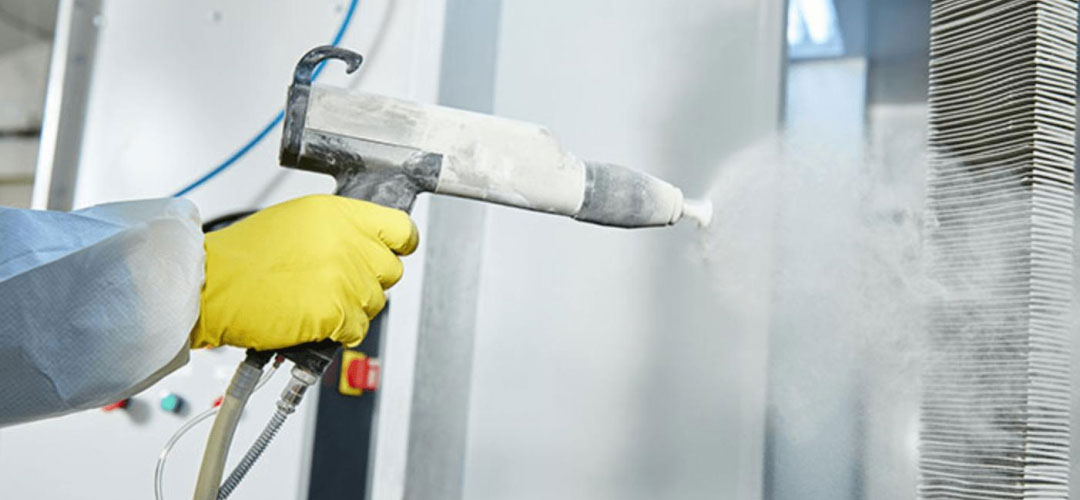
Second, the application process is equally important. Transparent powder coatings are usually applied using electrostatic spraying technology. This method utilizes electrostatic forces to attract and adhere the powder particles to the substrate’s surface. Specifically, the powder is electrically charged and then sprayed onto the substrate via a spray gun. During spraying, electrostatic attraction causes the powder to adhere to the substrate, forming a uniform layer. Finally, the coated substrate is placed in an oven; under controlled temperature and time, the resin and curing agent within the powder react to form a durable coating film.
The fundamental principle of transparent powder coatings lies in the curing process of the powder material. When powder coating is applied to a substrate and heated in an oven, a chemical reaction occurs between the curing agent and the resin within the coating film. This reaction creates a cross-linked structure, imparting excellent hardness and wear resistance to the film. Unlike traditional liquid coatings, the curing of transparent powder coatings involves a chemical reaction; consequently, the coating process can be carried out at lower temperatures, thereby reducing energy consumption and emissions.
In practical applications, transparent powder coatings are used across various sectors, including automotive manufacturing, furniture production, and the metal industry. Beyond protecting the substrate and extending its service life, these coatings can be engineered—by adjusting resin composition and additive ratios—to achieve special properties such as fingerprint resistance, self-cleaning capabilities, and UV protection.
In summary, the fundamental mechanism of transparent powder coatings involves the formation of a cross-linked structure through the chemical reaction between the curing agent and the resin, which provides the film with hardness and wear resistance. At the same time, the coating’s composition and the application process are critical factors in achieving the desired performance. By optimizing the formulation and controlling the application process, it is possible to produce a coating film with a transparent, high-gloss finish.

Find More
Comments (0)