
Water Transfer Printing (WTP) is an advanced surface decoration technology that transfers patterns from a…
Automotive Bumper Coating Line
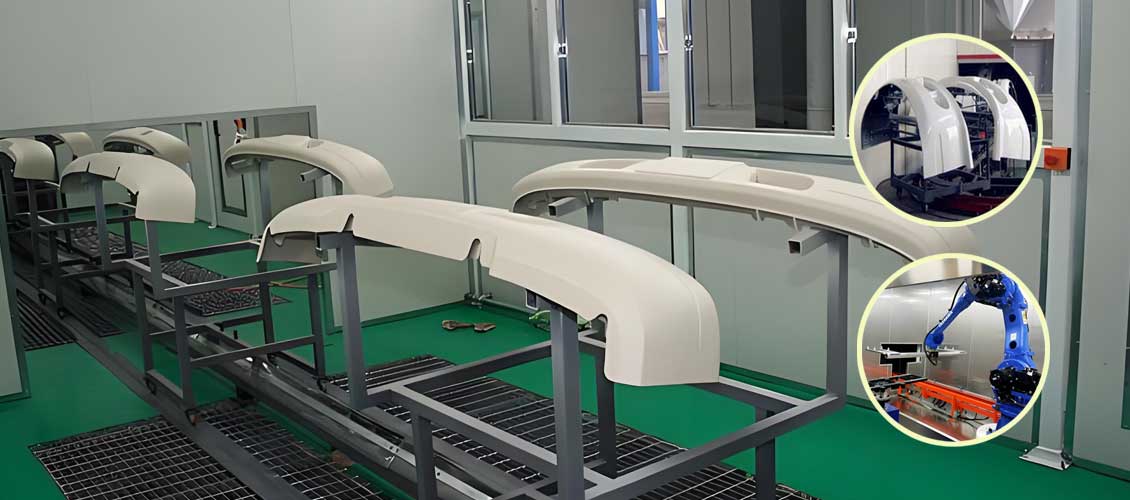
Bumper coating line is made in multiple ways based the product parameters and production requirements. This refers to painting techniques and the conveyor setup. Its normally setup over power & free ground conveyor, skid conveyor as well as continuous conveyor. Being a custom project, a deep communication is needed for final setup.
High quality coating treatment is crucial to get nice looking and long life cycle for bumper. Normally, there’re total of 3 layers coating to be sprayed: base coat, middle coat and top coat. The difference of bumper coating line comparing to any other coating solution is it’s big size and extremely high clean requirement. Either solvent or water base paint is dust friendly during the treatment passage, thus a proper clean air filtration and coating line structure highly rely on provider’s experience. A full automatic bumper painting line success deeply depends on manufacturer’s understanding and management skills.
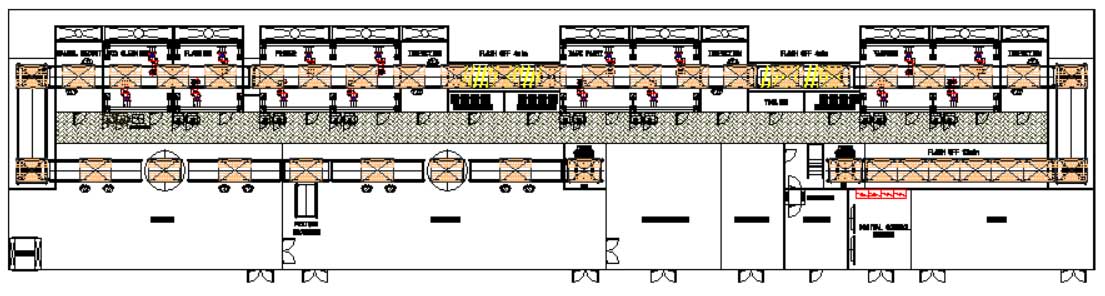
A typical bumper painting line workflow is configured as following:
Loading -> Pre-degreasing -> degreasing -> rinsing1 -> rinsing2 -> water spray -> drying -> cooling -> turn piece -> sanding -> electrostatic de-dust -> base coat spray -> leveling -> middle coat spray -> levling -> top coat spray -> leveling -> drying -> unloading
Because bumpers come with big size for itself, each process takes a bit longer time to complete thus environment cleanness is crucial to maintain it’s high quality finishing. Both spraying area and the passage to furnace tunnel must be well protected with stable clean air supply and efficient solution to avoid potential dusts such as a water tank under leveling passage.
Bumper Painting Core Process
Preparation
Cleaning – Thoroughly clean the bumper surface with soapy water or car wash liquid to remove dust, grease, and debris, ensuring a clean and dust-free surface for proper paint adhesion.
Sanding and Repair – Use specialized sandpaper to finely sand scratched or damaged areas, removing old paint and rough surfaces. For dents or cracks, use a professional filler to fill them and sand the surface until smooth, ensuring no visible seams with the car body.
Primer Application
Primer Spraying – Apply a layer of primer evenly to the bumper. The primer acts as an adhesive and also provides rust protection. Ensure the primer completely covers the entire surface and sand it lightly after drying to ensure a smooth paint surface.
Topcoat and Clearcoat Application
Topcoat Selection – Choose a topcoat that matches the original bumper color and apply it evenly, ensuring full coverage and no runs. If necessary, repeat the painting process and allow it to dry to achieve the desired effect.
Clearcoat Application: After the topcoat dries, apply a layer of clearcoat to increase the gloss and protective properties of the paint.
Post-Treatment
Polishing – After the clearcoat is completely dry, polish the bumper to achieve maximum shine and durability. Be careful with the polishing pressure to avoid damaging the bumper surface.
Inspection: Finally, inspect the bumper for any remaining imperfections or uneven areas. If necessary, perform further repairs and polishing.
Bumper coating line FAQ
Should I use manual or automatic painting?
You should choose according to your output rate and worktime arrangement. Robotic solution can reduce lots of man power while the first investment is high. Manual option is ideal choice for low production rate.
How much space will it required for installation?
Take 500pcs/day for instance, you will need 20*50m workshop. Beside the painting line itself, we will need lots of space for loading/unloading as well as temporary storage space.
How many containers required for coating line delivery?
If everything properly packed, the coating line can be packed via 8 containers.
How much time required for producing?
Producing and verification in factory takes up to 120 days. Onsite installation requires minimum 30 days to ensure everything can be running properly.

Comments (0)