
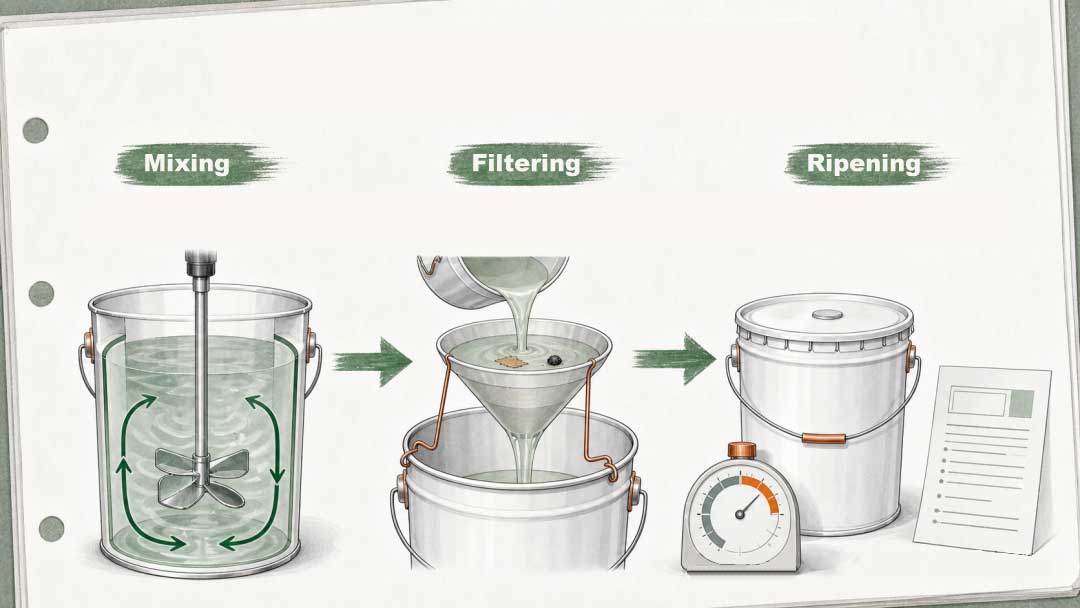
After opening the paint container: stirring, filtering, and induction - three steps addressing three distinct…

How Does Air Affect Spray Painting Quality
Even with top-quality coatings and the most advanced spray machinery, but still struggling with particles and pinholes? Many people have checked their formulas and equipment, but overlooked the most crucial variable: the air itself. Today, we’ll reveal the invisible dimension affecting coating quality: the air purification system.
In the painting industry, air is a critical medium determining paint film quality. Insufficient cleanliness leads to particles, temperature and humidity fluctuations interfere with paint leveling and curing. Turbulent airflow causes uneven spraying. Controlling the air means controlling the spraying quality. Air purification is not simply dust removal, it’s a precise system that makes air a controllable process medium. The core lies in the synergy of four key aspects.
First, building a multi-stage filtration system. Like a precise sieve, it uses pre-filters and medium-efficiency filters to intercept large particles, and high-efficiency filters to capture micron-sized dust. Contaminants are removed layer by layer before they reach the tools.
Second, directional intelligent airflow. Clean air needs to be effectively managed. Through stable vertical laminar flow and a precise differential pressure control system, the airflow is guided like an invisible conveyor belt, smoothly and orderly carrying away pollutants, eliminating contaminant retention in the flow field.
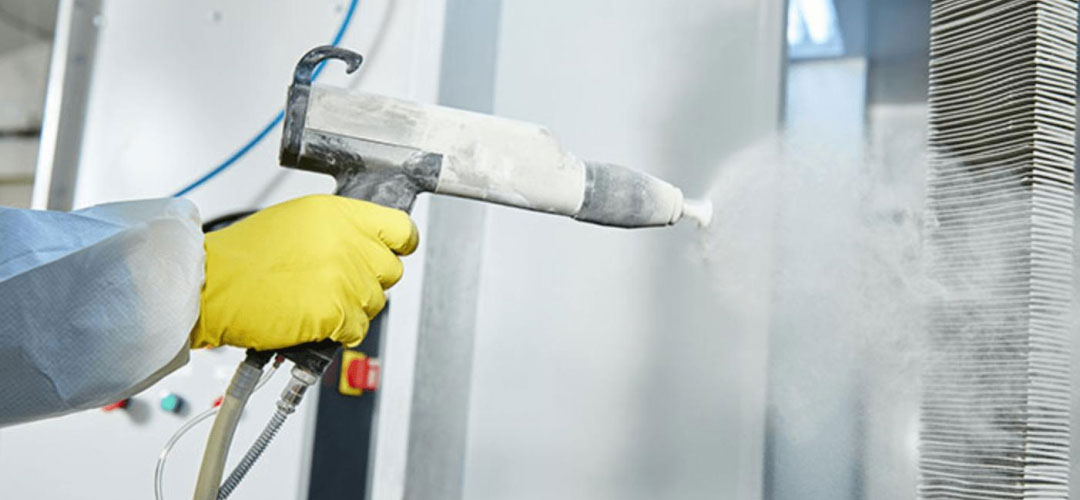
Third, controlling paint overspray. Overspray is the main source of internal contamination. An efficient dry or wet capture system must capture it the moment it’s generated, preventing it from spreading into the work environment and causing secondary pollution.
Fourth, achieving stable environmental control. Temperature and humidity are environmental parameters that affect coating leveling and curing rates. The system must control their fluctuations within the allowable deviation of the process window, providing stable environmental conditions for every spraying process.
Based on this system logic, when defects occur, we can perform efficient reverse engineering diagnostics. When random particle deposition is found on the workpiece surface, the integrity of the filtration system needs to be verified. Check if the high-efficiency filter has frame seal failure or filter media damage. Also, confirm that the clean area maintains stable positive pressure and observe whether the airflow forms a vertical laminar flow, ensuring that suspended particles are directed to the return air vent. If the coating shows pinholes or fisheyes, the root cause is often the intrusion of low surface tension contaminants. In this case, the saturation state of the chemical filter should be checked. Trace the cross-contamination risks of the fresh air system and surrounding areas, and test the oil content of the compressed air.
If the coating exhibits uneven curing or poor leveling, the root causes are often uncontrolled temperature and humidity, or uneven airflow distribution. These factors require thorough investigation. Measure the temperature, humidity, and airflow speed at various points on the work surface. Confirm that they are within the process parameters and evenly distributed. Verify that the airflow is directional with no lateral interference, and check the calibration accuracy and proper placement of temperature and humidity sensors. If the coating shows a hazy appearance, it is likely due to paint particles not being removed promptly and settling back onto the surface.
Focus on two key aspects: firstly, the containment capability – is the booth filtration system still effective? Secondly, the exhaust power – is the ventilation sufficient? Does it ensure that paint mist is quickly removed from the workshop instead of circulating internally? High-quality spraying results depend on the deep synergy between coating equipment and a controlled environment.

Find More
Comments (0)